ServicesWater Softeners
Water Softeners in Goodyear, With Resin and Valves Explained
We install water softeners sized to your water and your household, and we explain what goes inside them: the resin, the tank, the control valve and the salt it runs on. It starts with a free water test, so you know whether a softener is the right fit before anything is quoted.
What a Softener Does in Your Home
A water softener takes out the calcium and magnesium behind chalky deposits on fixtures, cloudy shower doors and the mineral layer that slowly builds inside a water heater. It works through ion exchange: water passes through a bed of resin beads that swap those hardness minerals for sodium or potassium. Water across the West Valley tends to run hard, so most people notice the change within a week, on dishes and fixtures first.
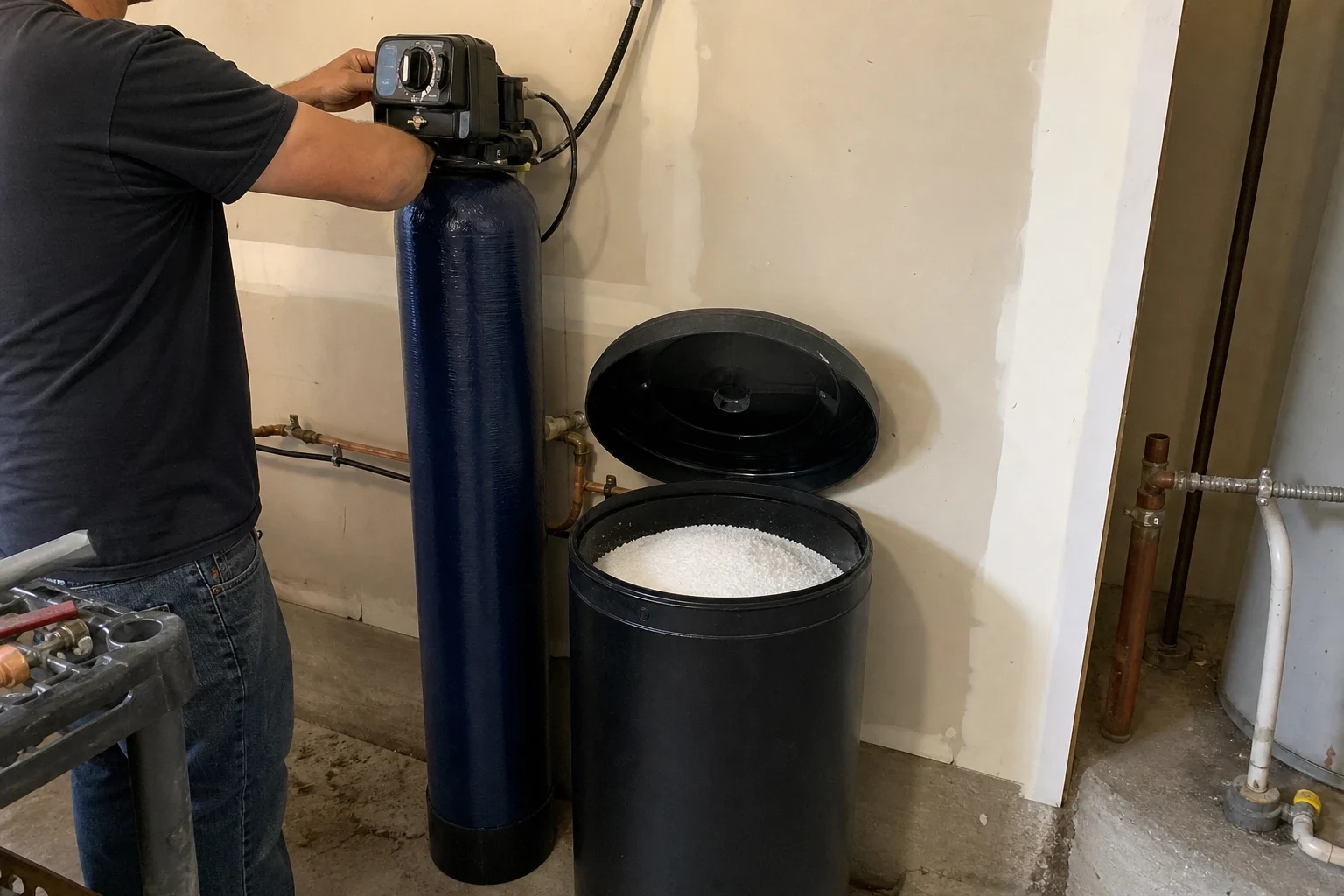
Most of a softener is a tank of resin and a valve on top. The grade of those two parts decides how long the system keeps working and how much salt and water it uses along the way. That is why we walk you through each material before you choose.
A softener is not the answer to every water complaint. If chlorine taste is what bothers you, whole-home filtration is the better first step. If your concern is drinking water, reverse osmosis at the kitchen sink fits better. We will tell you which one your test points to.
The Materials and Work in Every Install
Resin chosen for city water
Standard resin is 8 percent crosslink. For chlorinated city water we often suggest 10 percent crosslink, which resists breakdown from chlorine and tends to last noticeably longer. We explain the trade-off in cost so you can decide.
A tank that will not rust
Mineral tanks are fiberglass-reinforced with a polyethylene liner. They hold pressure, do not corrode and handle the temperature swings of a garage install well.
Metered control valve
A metered valve regenerates based on the gallons you actually use, not a fixed calendar. That saves salt and water in a quiet week and keeps up when guests are staying.
Brine tank and salt choice
You can run the system on sodium chloride or potassium chloride. Potassium costs more per bag and usually needs a higher setting, but some households prefer it. We set the valve for whichever you pick.
Bypass, drain and plumbing
Every install includes a bypass valve, connections to your existing loop in copper or PEX, and a drain line with a proper air gap. The install itself is included with the system rather than billed as an extra.
When a Softener Is Worth a Look
- Chalky rings on fixtures
- White deposits around aerators, showerheads and faucet bases are hardness minerals left behind as water dries. Clean them off and they return fast.
- Hazy glasses and shower doors
- Glassware leaves the dishwasher cloudy, and the shower glass needs scrubbing every couple of days.
- A water heater that pops
- Popping or crackling as the heater warms usually means mineral sediment has settled at the bottom of the tank. The burner must heat through it, which wastes energy and can shorten the heater's life.
- Soap that barely suds
- Hardness minerals grab onto soap before it can lather. Shampoo and soap get used up too quickly, and skin may feel tight or coated after showering.
- An aging softener that falls behind
- Spots that keep showing up even as you add salt can mean tired resin or a failing valve. A resin change sometimes does the job, and we will tell you if so.
How a Softener Install Runs
- 1
Free water test
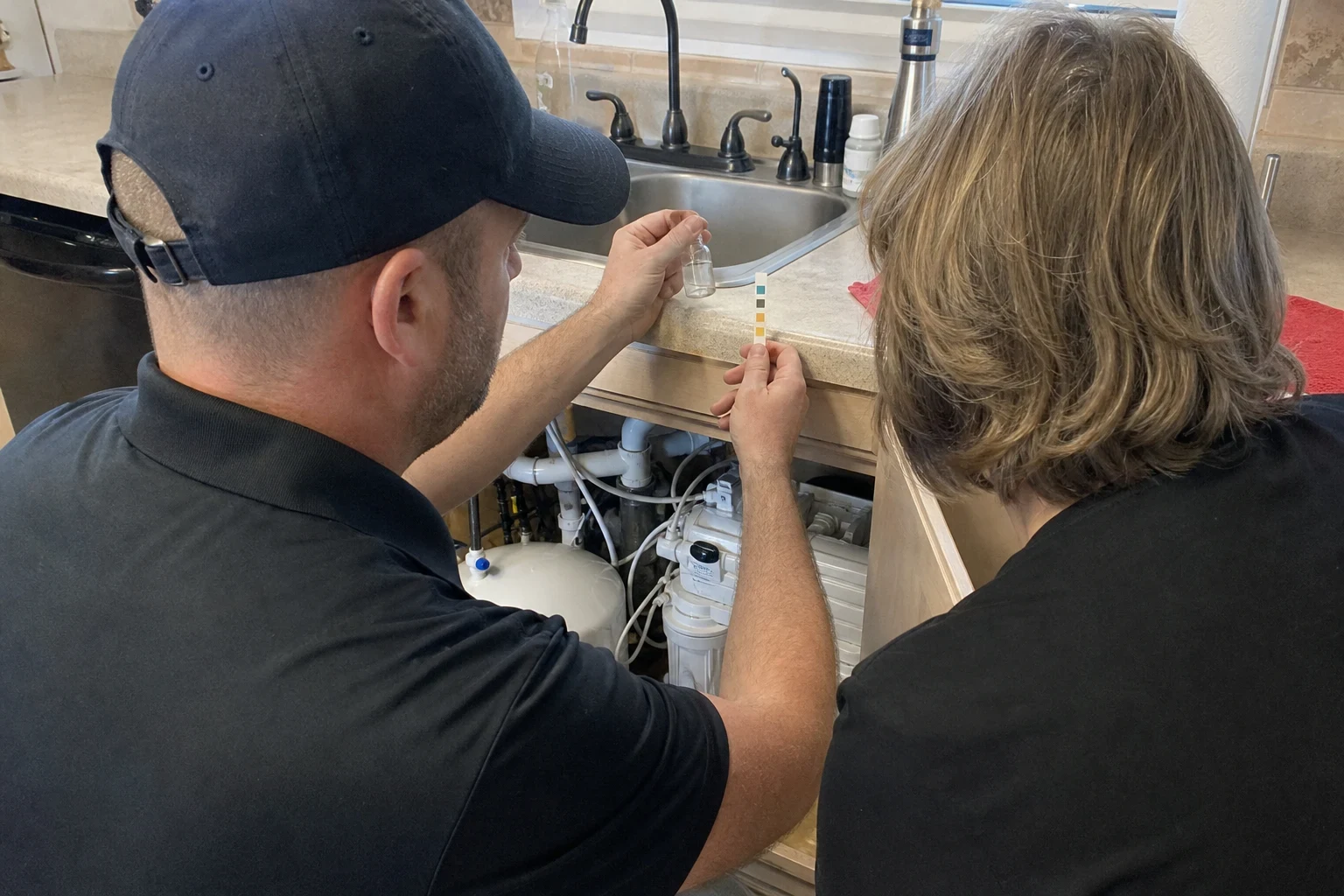
We test hardness along with iron, chlorine and total dissolved solids. There is no obligation, and if the numbers do not support a softener, we will tell you plainly.
- 2
Sizing and materials
We size the system to your hardness and household use, then go through resin grade, valve type and salt options. You get installed system pricing by phone, with each part named.
- 3
Install day
Our partner plumber shuts off the water, protects the floor around the work area and connects the softener to your loop with a bypass and drain line. Most installs take part of a day.
- 4
Setup and walkthrough
We program the valve to your water, check the softened water at a tap and show you how to add salt and use the bypass. Before we go, the work area is cleaned up and the old packaging leaves with us.
What Moves the Price of a Softener
Two softeners can look alike from the outside and cost quite differently. The price comes down to capacity, the grade of the parts inside and how easily the system connects to your plumbing. Your quote lists each of these so nothing is a surprise.
- Capacity
- Larger households and harder water need more resin and a bigger tank. Undersizing saves money at first but means more frequent regeneration.
- Resin and valve grade
- Higher crosslink resin and a metered valve cost more up front and usually pay back in a longer service life and lower salt use.
- Plumbing access
- A home with an existing softener loop is simpler. If a loop needs to be added, or the drain is far from the install spot, labor goes up.
- Add-on filtration
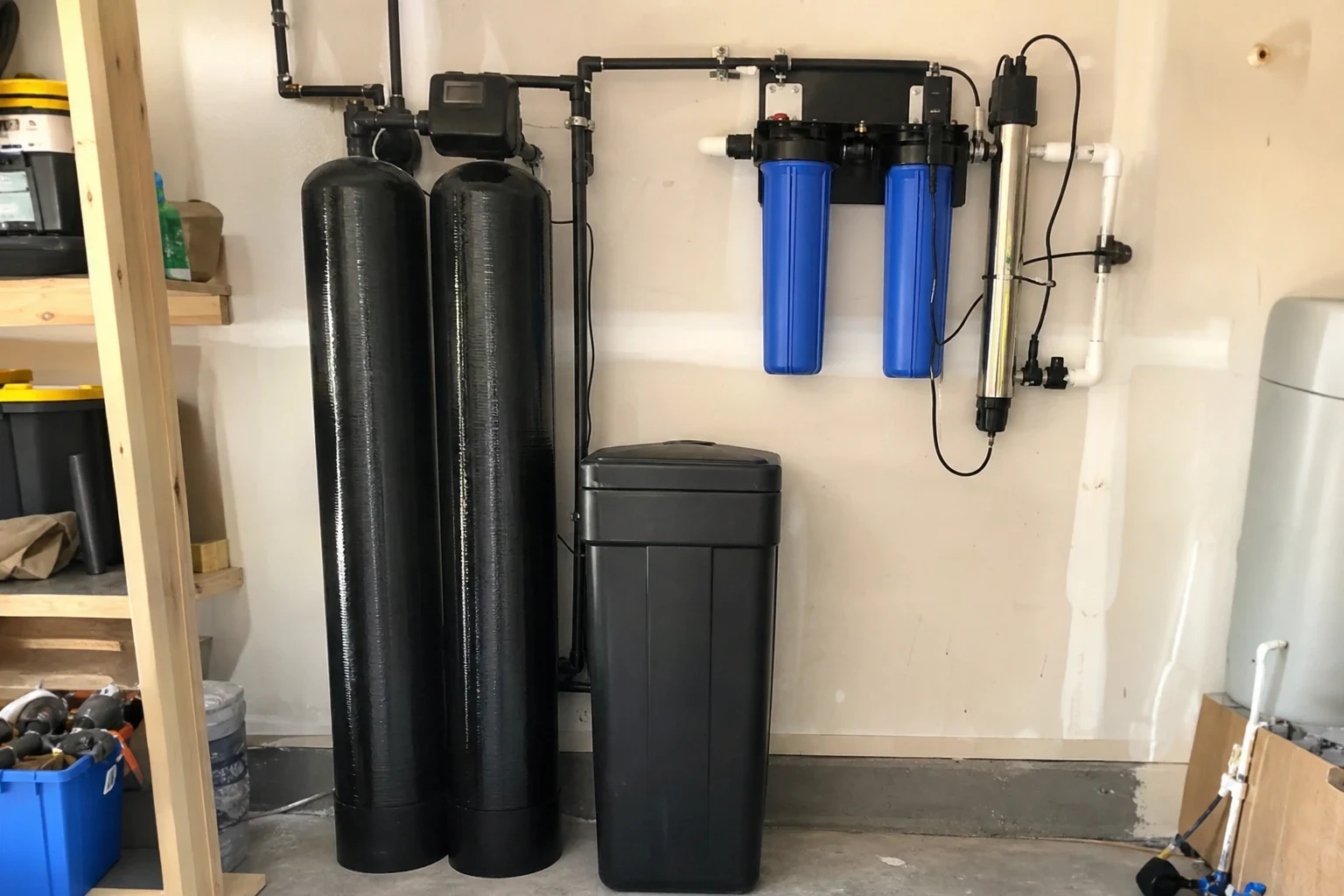
- A carbon pre-filter protects the resin from chlorine and improves taste. It is optional, and we only suggest it when your test supports it.
Common Softener Questions
- Is softened water safe to drink?
- It is fine for most people. The softener puts a small amount of sodium into the water, or potassium if you fill it with potassium salt. Anyone watching sodium can add a reverse osmosis unit at the kitchen sink, which removes most of it from drinking water.
- How much salt does a softener use?
- It varies with your hardness reading, the size of your household and the kind of valve. Homes with a metered valve often go through one or two bags a month. Once the system has run for a while, we check your actual use and adjust the setting where needed.
- Can a softener handle garage heat?
- Usually, yes. Around here the softener loop tends to sit in the garage, and the tanks and valves are built for warm conditions. Direct sun is harder on plastic parts than hot air, so we keep the unit out of it whenever the layout allows.
- Who does the install, and how is it covered?
- A partner plumber fits the softener, connects it to your plumbing and cleans the area when done. The work carries a 5-year warranty on installation and labor. Should a connection need attention, you phone the same number and we arrange the fix.
- Should I replace my softener or just the resin?
- If the tank and valve are still sound, new resin can bring an older unit back. If the valve is failing or its parts are no longer made, a new system makes more sense. We look it over and give you an honest answer.
Find Out What Your Water Needs First
We start with a free water test and a clear explanation of the materials that would suit your home. Our 3 five-star Google reviews came from people who started the same way.