ServicesReverse Osmosis
Reverse Osmosis in Goodyear, Fitted Neatly Under Your Sink
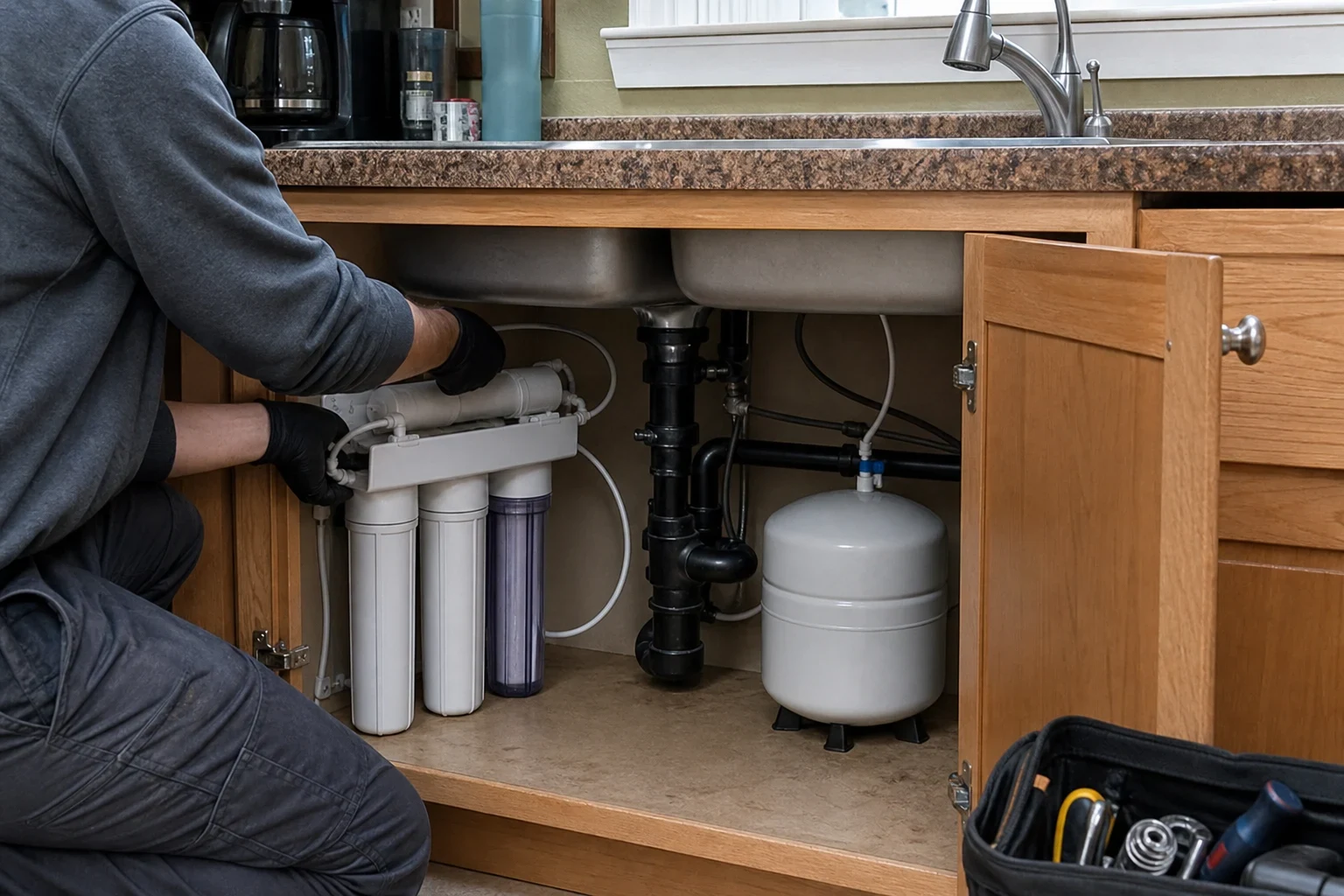
A reverse osmosis system gives your kitchen a dedicated tap of clean, clear drinking water. We test your water first, walk you through the membrane, filter, tank and faucet choices, and have one of our partner plumbers fit it neatly under your sink.
What reverse osmosis does in your home
Reverse osmosis forces tap water across a semipermeable membrane with openings far smaller than a dissolved mineral. Salts, hardness minerals and a long list of trace contaminants stay behind and rinse away to the drain, while the cleaned water collects in a small tank. From there it feeds a separate faucet for drinking glasses, cooking pots and the morning kettle. It serves one tap, usually at the kitchen sink, so it works alongside whole-home filtration or a water softener rather than replacing them.
The mineral-heavy water common across the West Valley is exactly where RO earns its place. It is also where the parts matter most. Hard water wears on a membrane, so the pre-filters ahead of it and the way the system is set up decide how long it lasts and how the water tastes years from now. We explain each of those parts in plain terms so you know what you are buying and why.
What goes into a well-built RO system
Sediment pre-filter
A spun polypropylene cartridge catches sand, rust flakes and grit first. It is inexpensive to replace and protects everything downstream.
Carbon block pre-filter
Carbon strips out chlorine before the water reaches the membrane. That matters because chlorine gradually breaks down thin-film composite membranes. We choose a compressed carbon block rather than loose granules, since a solid block makes every drop pass through the media instead of finding a gap.
Thin-film composite membrane
This is the heart of the system. Membranes are rated by gallons per day, and we size yours to how much your household actually drinks and cooks with, not to the biggest number on the box.
Storage tank
Most tanks are steel or plastic shells with a butyl bladder inside. Steel is compact and familiar; plastic will not rust if the cabinet stays damp. We help you pick the size that fits the space under your sink.
Faucet and finish
The dedicated faucet sits beside your main one, so it should match. Chrome, brushed nickel and matte black are common, and we check that the finish suits your existing fixtures before we drill.
Optional add-ons
A remineralization cartridge adds back a little calcium and magnesium for a rounder taste. A permeate pump reduces the water sent to the drain and helps the tank fill faster.
When an under-sink RO tap is worth it
Bottled water is a weekly errand
Hauling cases and refilling jugs costs money and pantry space. A dedicated RO faucet puts comparable water right at the kitchen sink.
White crust on the kettle and coffee maker
Scale left inside small appliances means your water carries a heavy load of dissolved minerals. A membrane takes the bulk of that out of your glass and your coffee pot.
Cloudy ice or flat-tasting coffee
Minerals and chlorine both show up in ice and hot drinks. Cleaner water usually gives clearer cubes and a cleaner cup.
A high reading on your water test
If your free water test shows high total dissolved solids, a membrane is the most direct way to bring that number down at the tap.
You want extra assurance for drinking water
Some households simply want one more barrier for the water their kids drink. RO provides that without changing anything else in your home.
Steps in an RO installation
- 1
No-cost water test
The test is free and carries zero obligation. Hardness and dissolved solids readings show whether RO suits your water and whether something should go in ahead of it.
- 2
Picking your components
Together we go over membrane size, tank material, faucet finish and any extras. Installed system pricing comes by phone with every part listed, so you can weigh choices without rushing.
- 3
The install
A partner plumber mounts the system in your sink cabinet, hooks up the drain line, installs the faucet and adds a line to the fridge if you ask. Items under the sink are moved aside and the area is covered.
- 4
Flushing, leak check and handoff
Fresh carbon and membranes are flushed before you pour a glass. We look over each fitting for leaks, point out every filter and explain its change schedule. The cabinet is then cleaned and left the way we found it.
What sets the price of an RO system
Our water treatment systems come with installation, so the quote includes both the equipment and the fitting. Most of the total comes down to the parts you pick and the layout of your kitchen. We explain where paying more makes sense and where it does not.
- Membrane capacity and stage count
- More gallons per day or an added filter stage raises the cost. Few homes need the biggest unit.
- Tank and faucet choices
- A bigger tank or a specialty faucet finish adds to the price. A standard tank and plain chrome faucet perform just as well.
- Optional extras
- A permeate pump or remineralization cartridge raises the price, and each adds a part to replace down the road.
- Your kitchen layout
- A cramped cabinet, a stone counter that needs a precise faucet hole or a long line over to the fridge makes the job take longer.
Reverse osmosis questions we hear often
Something not covered here? (480) 428-0739
Does reverse osmosis waste water?
Yes, some water goes to the drain as the membrane rinses itself. How much depends on your water pressure and the system design. A permeate pump cuts that amount noticeably, and we will tell you whether one makes sense in your home.
How often do the filters need changing?
Sediment and carbon pre-filters are usually changed every six to twelve months. The membrane typically lasts a few years, depending on how hard your water is and how well the pre-filters are kept up. We show you each cartridge on install day so the schedule is clear.
Will RO water taste flat?
Some people notice a very clean, light taste because most minerals are removed. A remineralization cartridge adds a small amount back. Many households like it either way, so we explain both before you choose.
Can the system supply my fridge's water dispenser?
In most kitchens it can. A thin supply tube runs from the RO tank over to the refrigerator, and the distance and route it takes shape how long the install runs. Plenty of people add it so their ice and chilled water come from the same clean supply as the sink tap.
Do I need a water softener too?
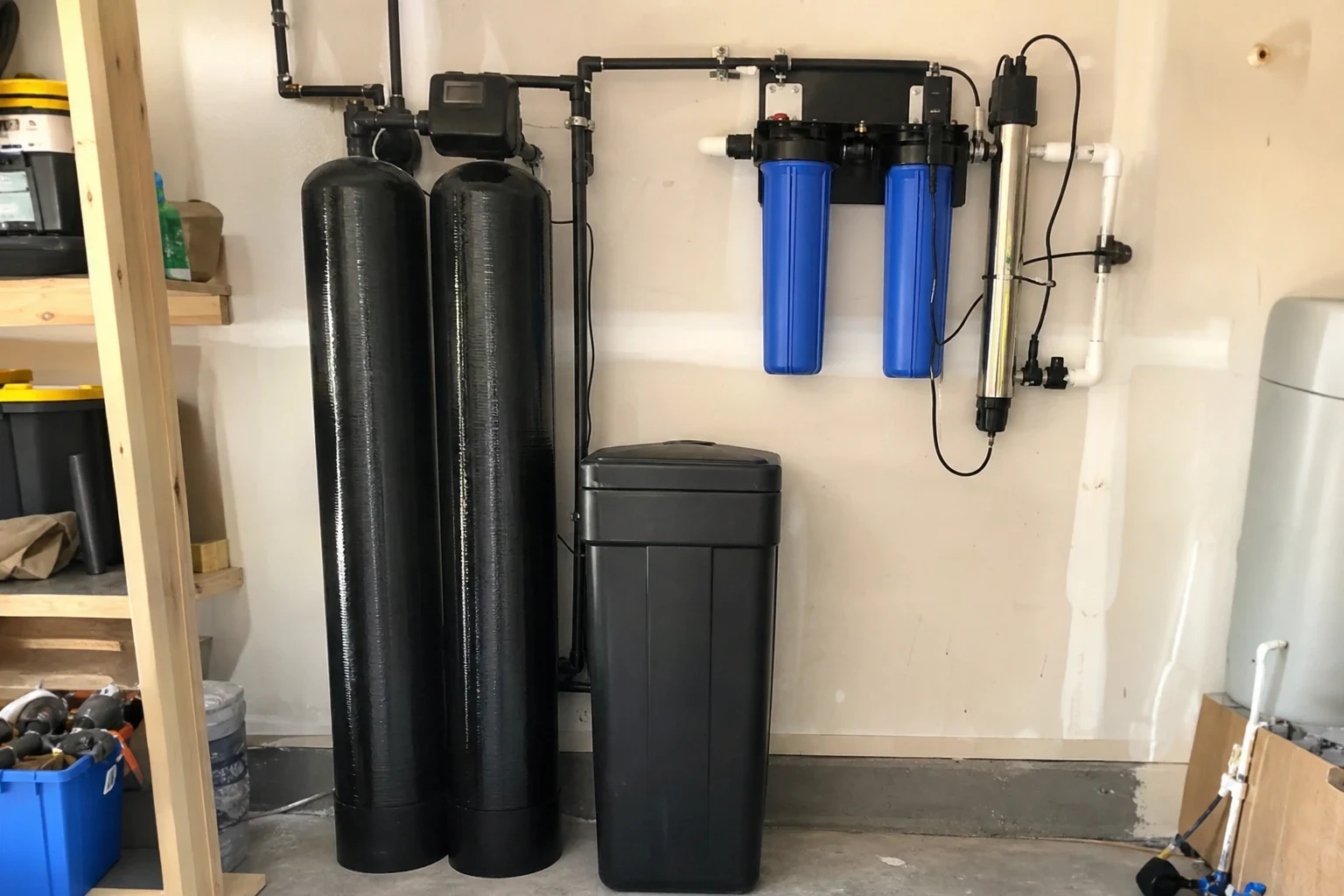
Not always. Very hard water shortens membrane life, so in some homes a water softener ahead of the RO protects your investment. Your water test tells us which case you are in.
Is the installation covered?
Yes. One of our partner plumbers handles the fitting, and every RO install carries a 5-year warranty on installation and labor. We walk you through what that covers on install day. Our customers have left us 3 five-star Google reviews so far.
See what's in your water before you choose
A free water test shows whether reverse osmosis is the right fit, and which membrane, tank and faucet suit your kitchen. There is no obligation, and you get installed system pricing on the same call.